

Why Some B2B Lead Generation Companies Perform Better Than Others
Every B2B lead generation company promises qualified leads, better databases, and stronger sales pipelines. Yet, businesses often see very different results. One partner consistently delivers prospects that convert into meetings and revenue, while another produces large contact lists that generate little business impact.
The difference isn’t the campaign budget or the number of emails sent. It lies in the strategy behind lead generation. High-performing B2B Lead Generation Companies focus on identifying the right audience, using verified data, qualifying prospects, leveraging technology, and aligning closely with sales teams to create opportunities with genuine buying potential. Rather than measuring success by lead volume alone, they prioritize lead quality and conversion.
In this blog, we’ll explore why some B2B Lead Generation Companies consistently perform better than others, the factors that drive stronger results, and what businesses should look for when choosing a lead generation partner.
What Sets High-Performing B2B Lead Generation Companies Apart
1. They Measure Success by Revenue, Not Lead Volume
One of the clearest differences between average and high-performing providers is how they define success. Many companies still judge campaigns by one simple metric: the number of leads generated. While large lead volumes may look impressive in reports, they often hide a much bigger problem. If those leads aren’t relevant, engaged, or ready to have a business conversation, they contribute very little to pipeline growth.
Leading B2B Lead Generation Companies take a different approach. Instead of chasing lead volume, they focus on generating opportunities that contribute to business growth. Their campaigns are designed to deliver prospects that sales teams are confident pursuing, not simply expand a contact database.
Rather than measuring success by lead count alone, they evaluate performance through metrics such as:
- Qualified opportunities generated
- Sales acceptance rate
- Meeting-to-opportunity conversion
- Pipeline contribution
- Revenue influence
This approach delivers measurable business value. Research shows that companies focusing on lead quality can reduce customer acquisition costs (CPA) by up to 60%, even if their cost per lead (CPL) is higher. That’s because qualified prospects are far more likely to convert into revenue than large volumes of low-intent contacts. These metrics provide a much clearer picture of campaign effectiveness because they reflect real business outcomes instead of vanity metrics. eness because they measure business outcomes instead of vanity metrics.
2. Better Audience Selection Creates Better Opportunities
Not every company within your target industry is a potential customer. One of the biggest reasons lead generation campaigns fail is poor audience selection. Many providers build broad prospect lists based on basic firmographic information, assuming that anyone within a certain industry or company size is worth targeting. This often leads to generic messaging and low engagement.
The best B2B lead generation companies spend considerable time understanding their client’s business before launching campaigns because a successful B2B lead generation process starts with a deep understanding of the business. They build detailed Ideal Customer Profiles that go far beyond company size or industry.
They analyze factors such as organizational structure, geographic priorities, technology environment, buying committees, business challenges, and decision-making roles. Instead of trying to reach thousands of businesses, they focus on identifying the accounts that are most likely to benefit from the client’s solution.
This precision improves every stage of the campaign. Messaging becomes more relevant, engagement rates increase, and sales teams receive prospects that better align with their target market. Better audience selection doesn’t reduce opportunity—it increases the likelihood that every conversation will be valuable.
3. Better Data Separates High Performers from Average Providers
Even the strongest campaign strategy cannot overcome poor-quality data. Inaccurate contact information, outdated job titles, duplicate records, and irrelevant accounts reduce campaign performance long before outreach begins.
High-performing B2B Lead Generation Companies treat data as a competitive advantage rather than a commodity. The most effective B2B Lead Generation Services are built on accurate, continuously verified data rather than static contact lists. Instead of relying on static databases, they continuously verify and enrich their records using multiple data points, including:
- Verified contact information
- Company intelligence
- Industry and geographic segmentation
- Technographic insights
- Buyer intent signals
This richer level of intelligence allows businesses to personalize outreach, improve response rates, and give sales teams greater confidence in every lead they receive.
4. Lead Qualification Is Where Top Performers Separate Themselves
Generating responses isn’t the same as generating opportunities. Someone downloading a white paper or registering for a webinar doesn’t automatically mean they’re ready to speak with sales.
This is where many providers fall short. They forward every inquiry to the sales team regardless of whether the prospect has genuine buying intent. Sales representatives then spend valuable time filtering through low-quality inquiries instead of engaging serious buyers.
The companies that consistently perform better understand that lead qualification is just as important as lead generation.
Before handing prospects to sales, they evaluate multiple factors, including business fit, decision-making authority, current challenges, buying timelines, engagement levels, and willingness to continue the conversation.
This additional layer of qualification creates a significant difference in campaign outcomes. Sales teams receive fewer leads overall, but the conversations they have are far more productive. Higher-quality leads improve conversion rates, shorten sales cycles, and increase confidence in marketing-generated pipelines.
5. Technology Supports Better Decisions, Not Better Marketing Alone
Technology has transformed the way modern lead generation campaigns operate. Advanced B2B lead generation platforms provide businesses with access to automation, buyer intent signals, predictive analytics, campaign tracking, and data enrichment capabilities that were unavailable just a few years ago.
However, technology by itself doesn’t create successful campaigns.
Many organizations assume that investing in sophisticated software automatically improves lead quality. In reality, technology is only as effective as the strategy behind it.
High-performing providers use technology to strengthen human decision-making rather than replace it. AI and automation help identify high-intent prospects, prioritize accounts, personalize messaging, monitor engagement, and optimize campaign performance. Human expertise then interprets those insights to create messaging and outreach strategies that resonate with buyers.
This balance between technology and strategic thinking has become increasingly important as buyer behaviour evolves. According to Gartner, 75% of B2B buyers prefer a rep-free buying experience, completing much of their research independently before engaging with sales. Modern B2B lead generation platforms help businesses identify these digital buying signals, enabling sales teams to engage prospects with the right message at the right stage of the buying journey rather than relying on cold outreach alone.
6. Multi-Channel Engagement Creates Stronger Buyer Relationships
Enterprise buyers rarely make purchasing decisions after a single interaction. They consume content across multiple channels, compare vendors, involve internal stakeholders, and research extensively before engaging with sales.
Successful B2B Lead Generation Services recognize this behaviour and build coordinated engagement strategies instead of relying on a single outreach channel.
Their campaigns typically combine:
- Email marketing
- Content syndication
- Webinar promotion
- Appointment generation
- Tele-qualification
- Structured follow-up campaigns
Each interaction builds familiarity, reinforces brand credibility, and creates additional opportunities to identify buying intent throughout the customer journey.
7. Sales and Marketing Alignment Improves Lead Quality
Another characteristic shared by leading B2B Lead Generation Companies is close alignment between marketing and sales.
Many lead generation programs struggle because both teams define success differently. Marketing celebrates high lead numbers, while sales measures success by qualified opportunities and closed deals. Without alignment, valuable prospects are often overlooked, while low-quality leads consume valuable sales resources.
High-performing providers address this challenge before campaigns begin.
They work closely with clients to define Ideal Customer Profiles, qualification criteria, target accounts, buyer personas, follow-up processes, and shared performance metrics. Both marketing and sales understand what qualifies as a successful lead and how opportunities should progress through the pipeline.
This shared understanding reduces friction, improves handoffs, accelerates follow-up, and creates greater trust between both teams. When sales and marketing operate with common goals, lead quality naturally improves.
8. Continuous Optimization Keeps Performance Improving
Markets evolve, buyer behaviour changes, and competitive landscapes shift throughout the year. Campaigns that delivered exceptional results six months ago may perform very differently today.
Average providers often repeat the same processes regardless of changing market conditions.
The best B2B lead generation companies treat every campaign as an opportunity to learn and improve. They continuously analyze audience engagement, messaging performance, qualification criteria, outreach timing, and channel effectiveness.
Small improvements made consistently across every campaign lead to significant gains over time. Continuous optimization ensures campaigns remain relevant, efficient, and closely aligned with changing buyer expectations.
Want to understand how the right partner can improve your pipeline? Read our blog on SaaS lead generation companies to learn what to look for before making a decision.
What Businesses Should Look for in a Lead Generation Partner
Choosing among B2B Lead Generation Companies shouldn’t be based solely on pricing or promised lead volume. The right provider should demonstrate a structured approach that supports long-term pipeline growth.
When evaluating potential partners, ask whether they build campaigns around your Ideal Customer Profile rather than broad target lists. Understand how they validate and maintain their data, because accurate information directly affects campaign performance.
Explore their lead qualification methodology and ask how prospects are assessed before being passed to your sales team. Review whether they support multi-channel engagement strategies instead of relying on a single outreach method.
It’s equally important to understand how they measure campaign success. Providers focused only on lead numbers often overlook the metrics that matter most to businesses, such as qualified opportunities, meeting conversions, pipeline contribution, and revenue impact.
Finally, ask how they optimize campaigns over time. The strongest partners continuously refine targeting, messaging, and outreach based on performance data instead of repeating identical campaigns.
Conclusion
The reason some B2B Lead Generation Companies consistently outperform others isn’t because they generate more leads. They perform better because every stage of their process is built around precision rather than volume. They invest in better audience selection, higher-quality data, stronger lead qualification, technology that supports smarter decisions, multi-channel engagement, and close alignment between marketing and sales.
As enterprise buying journeys continue to become more complex, businesses need partners that understand how to create qualified opportunities rather than simply increasing contact lists. Choosing a provider that prioritizes lead quality, buyer intent, and measurable business outcomes can significantly improve pipeline performance and create sustainable long-term growth.
Build a stronger sales pipeline with Almoh Media’s data-driven B2B Lead Generation Services, designed to connect you with the right buyers. Connect Today
FAQs
1. What makes B2B Lead Generation Companies perform better than others?
Top B2B Lead Generation Companies focus on lead quality, accurate targeting, verified data, and qualified opportunities instead of simply generating more leads.
2. How do B2B Lead Generation Services improve lead quality?
B2B Lead Generation Services improve lead quality by identifying the right audience, validating data, qualifying prospects, and using personalized, multi-channel outreach.
3. What do the best B2B lead generation companies do differently?
The best B2B lead generation companies build campaigns around Ideal Customer Profiles (ICPs), qualify leads before handing them to sales, and continuously optimize performance using data and buyer insights.
4. Why are B2B lead generation platforms important?
B2B lead generation platforms help businesses identify buying intent, enrich prospect data, automate outreach, and engage high-intent buyers more effectively.
5. How do I choose the right B2B Lead Generation Company?
Choose a partner that offers verified data, clear lead qualification, multi-channel engagement, transparent reporting, and a proven focus on delivering qualified sales opportunities.
Introduction
If you’re using content syndication, chances are you see it as just another way to get your content in front of more eyes. That’s fine, but there’s a lot more hidden beneath the surface. When you allow its full potential, content syndication ROI can surprise you, and it doesn’t take much to shift perception.
Let’s look at fresh data, outline a winning content syndication strategy, and show how U.S. B2B teams can get real value from it. Let’s begin!
What Is Content Syndication?
At its simplest, content syndication means sharing your B2B content: whitepapers, case studies, blogs on someone else’s site or network. This can be paid or free. You expand your reach, tap into new networks, and generate visibility, often reaching audiences you’d otherwise miss.
Why ROI From Content Syndication Deserves a Second Look
1. Huge lead production for relatively low spend
According to recent studies, the average cost per lead with content syndication is around $43. That’s far lower than other tactics, so even moderate conversion rates can offer solid returns.
2. Fast pipeline growth
Some platforms report that customers see 300–500% return on investment within three years. That’s not fluff – it’s real pipeline growth.
3. Verified conversion tracking methods
With UTM tagging and targeted vendor reports, U.S. marketers can track everything from initial syndication click to closed deal.
4. Built-in trust and positioning
Syndicating through known sites can give you indirect credibility, boosting brand awareness and authority without extra effort.
B2B Content Syndication Strategy: How to Do It Right
A good content syndication strategy starts long before content hits a third-party platform:
a). Pick assets that matter
Whitepapers, case studies, and long-form guides work best. They not only attract interest but also help establish your brand as industry-relevant.
b). Target lead quality, not rush volume
Instead of chasing clicks, target professionals. For example, top B2B firms average a 5.31% conversion rate on syndication offers.
c). Tag everything with UTM links
Measure traffic, engagement, bounce rates, and conversions back at your URL. This helps with syndication attribution.
d). Track core metrics
- CPL (cost per lead)
- MQL-to-SQL conversion rates
- Revenue per lead (use your average contract value)
e). Use the ROI formula
ROI= Revenue−Spend
Spend
For example, $1,000 spent → 50 high-quality leads → $5,000 average value = ($250k – $1k)/$1k = 249× ROI.
f). Optimize, rinse, repeat
Check what works by audience, site, and format. Then double down and drop what doesn’t.
Concrete U.S. ROI Stats You Can’t Ignore
| Metric | Statistics/Insight |
| Cost per lead | $43 average CPL |
| Syndication conversion rate | ~5.31% typical |
| Lead-to-deal conversion lift | 45% increase when focus is on quality |
| ROI over 3 years | 300%–500% reported |
| Projected industry growth | From $4.7 B in 2022 to $5.9 B by 2030 |
Content Syndication for Lead Gen: A Step‑by‑Step Plan
1. Define your ideal audience
Use buyer personas: titles, sectors, company size – so your content finds the right hands. This way, a sharper audience focus helps eliminate wasted spend and improves downstream lead quality.
2. Pick content with substance
Original research, how-to guides, competitive whitepapers – these both educate and convert. Plus, assets that solve specific problems tend to drive stronger engagement and more intent-driven leads.
3. Choose partners wisely
Use third-party platforms to reach U.S. B2B audiences. Look for those offering clear lead reporting and media kits. Before moving forward, ask for case studies or past performance metrics to make a more informed decision.
4. Structure campaigns with UTM tags
Make distinct tracking links for each partner and asset. This makes sure it’s easier to attribute leads, identify top performers, and compare ROI across channels.
5. Launch and monitor
Track CPL, CPL-to-SQL, cost per opportunity, pipeline driven, and revenue tied. At the same time, monitor activity in real-time to catch early trends and shift strategy fast if needed.
6. Review and refine monthly
Use metrics to shift spend toward top performers and tweak underperformers. As a result, consistent optimization keeps your syndication efforts aligned with revenue goals, not just vanity metrics.
How to Calculate Content Syndication ROI
- Calculate total spend (vendor fees + internal costs).
- Count total leads.
- Multiply leads by average deal size for potential revenue.
- Apply the ROI formula:
Revenue−Spend
Spend - Compare ROI over time to benchmark your initiatives.
This method is backed by multiple calculators and case studies.
Hidden Content Syndication Benefits
- SEO gains: Backlinks from quality sources can raise domain authority.
- Brand authority: Recognition on respected sites = credibility.
- Extended content life: A blog post can live on for months if syndicated well.
- Nurture acceleration: Leads from syndication are often further along in buying cycles.
Mistakes to Avoid and Fix Fast
Mistake: Only tracking clicks, not deals.
Fix: Tie every lead back to conversions with CRM integration. That way, you get a clearer picture of what’s actually driving revenue, not just traffic.
Mistake: Focusing only on cheap volume.
Fix: Go after quality; MQL-to-SQL rates matter most. Otherwise, your sales team will waste time on leads that won’t convert.
Mistake: Publishing irrelevant content.
Fix: Audit content – ensure tone, relevancy, and depth match syndication partner audiences. In doing so, you increase the chances of your content resonating with the right decision-makers.
Mistake: Not optimizing over time.
Fix: Regular performance review. Cut poor performers, boost winners. Over time, this helps improve ROI and keeps your content syndication strategy focused and results-driven.
Why Lead Quality Beats Volume
Not all leads are created equal. A smaller batch of high-intent leads can drive more revenue than a huge pool of low-interest ones.
Many B2B brands in the USA are shifting toward account- based syndication, where campaigns are matched to specific industries or companies. This helps improve conversion rates, shorten sales cycles, and increase customer lifetime value.
In short, prioritizing lead quality helps improve the long-term content syndication ROI, especially when targeting high-ticket accounts.
How AI Is Shaping the Future of Syndication
AI tools are starting to reshape content syndication strategy by analyzing behavior patterns and automating placements across high-performing channels.
With predictive scoring, marketers can now:
- Match content formats to individual user segments
- Forecast lead readiness using engagement scores
- Automate syndication at scale using content intent data
These innovations are raising the ceiling on what’s possible for B2B content syndication, especially for companies focused on measurable results.
About Almoh Media
Use metrics to shift spend toward top performers and tweak underperformers.
As a result, consistent optimization keeps your syndication efforts aligned with revenue goals, not just vanity metrics.
At Almoh Media, we specialize in high-impact content syndication for lead gen. We help B2B companies in the U.S. grow their pipelines by delivering:
- Verified lead generation from trusted channels
- Industry-specific targeting and campaign setup
- Transparent reporting tied to your sales funnel
- A proven strategy backed by real ROI
We understand the U.S. B2B buyer journey, and our syndication campaigns are built to generate demand, not just clicks.
Final Takeaway
Content syndication is an easy win if done smartly.
Focus on:
- Quality, not just volume
- Clear tracking and attribution
- Lead-to-deal conversions
- Continuous optimization
With $43 CPL, 5+ percent conversion, and long-term returns of 300–500%, most U.S. B2B teams can justify putting more budget behind it.
Ready to Get Real ROI from Content Syndication?
Let Almoh Media help you build a smarter lead-gen machine. We bring strategy, scale, and precision to content syndication – so your campaigns don’t just get seen; they convert. Reach out now to get started.
-
 What Separates Average B2B Lead Generation Companies in the USA From Strategic Partners?
 -
 Benefits of Outsourcing Lead Generation: What Growing B2B Companies Often Overlook
 -
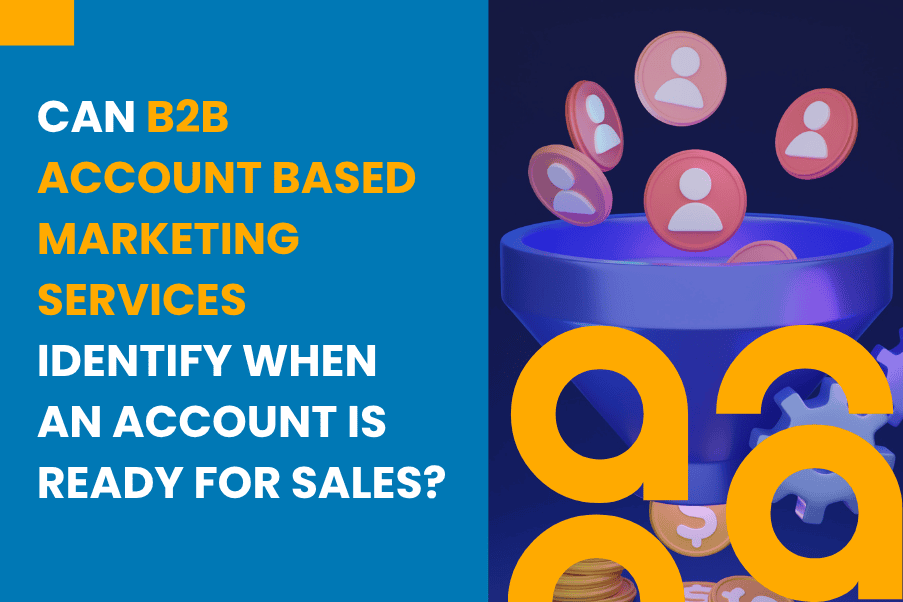 Can B2B Account Based Marketing Services Identify When an Account Is Ready for Sales?
 -
 What Happens When B2B Lead Generation Telemarketing Works With Email and Content?
 -
 What Happens After the Download? Rethinking B2B Content Syndication Services


